- Best months: shoulder season (November and March) for light and landscape work; December through mid-February for wildlife volume.
- Most common gear mistake: too few spare batteries. Cold cuts battery life fast - plan for three to four spares per body.
- Biggest factor in choosing a ship: guide ratio and Zodiac group size, not price or cabin category.
Best Time for Antarctica Photography
Timing is the first decision, and it shapes every other choice on this list. The Antarctic season runs November through March, but light quality and wildlife activity move in opposite directions across those months. Shoulder season delivers the best light and the fewest crowds at landing sites; high summer delivers the most wildlife activity under harder light. A South Georgia extension resets the calendar again, adding a wildlife-dense destination with its own seasonal logic.
| Month | Main Subjects | Light Quality | Pros | Cons |
|---|---|---|---|---|
| November | Fresh snow, early nesting behavior | Soft, often overcast, near-24h daylight | Pristine landscapes, uncrowded landings | Some species not yet at peak activity |
| December-January | Hatching chicks, elephant seal pups, king penguin chicks (South Georgia) | Bright, high-contrast midday sun | Peak wildlife activity and behavior | Harder light, more ships at popular sites |
| February | Fledging chicks, rising whale sightings | Bright, gradually softening toward month-end | Strong wildlife action, good whale odds | Still high-contrast through midday |
| March | Late-season whales, dramatic sunsets | Lower sun angle, warm tones, shorter days | Best light of the season for landscape work | Wildlife activity tapering, colder temperatures |
| South Georgia (add-on) | King penguins at all life stages, fur seals | Varies with add-on timing | Unmatched wildlife density and diversity | Extra transit time and cost |
Shoulder Season: November and March Light
November offers close to 24 hours of daylight and pristine, unbroken snowscapes, often under soft or overcast skies that suit landscape and ice photography, with fewer other visitors at landing sites early in the season. March moves in the opposite direction: lower sun angle, shorter days, warmer sunset tones, and more dramatic, intimate light. It is also the stronger of the two shoulder months for whale photography, as noted in Oceanwide Expeditions' seasonal guide for photographers, since krill concentrations peak toward the end of the season. Treat the two months as a trade-off, not a ranking.
High Summer: Peak Wildlife Photography in Antarctica
December through mid-February is peak wildlife season: penguin colonies at maximum occupation, chicks hatching and fledging from late December, seal pups on the ice, and frequent whale sightings. The trade-off is light - bright and high-contrast through the middle of the day. Experienced photographers work around it by shooting closer to local sunrise and sunset, favoring the overcast days that do occur, and using fill technique on backlit subjects rather than waiting for conditions that will not arrive in January.
South Georgia Photography Expedition: The Wildlife Bonus
South Georgia functions less like a calendar and more like a multiplier. King penguins breed on a cycle long enough that colonies hold chicks and adults year-round, so the island's peak season is effectively the whole visiting window, per Swoop Antarctica's South Georgia wildlife guide. Elephant seals are a reliable November highlight, and fur seal pups may still be present into March, though that later window is less consistently confirmed. South Georgia's king penguins are a distinct species from emperor penguins, which breed much further south and are not found on the island. A full month-by-month breakdown, including how the shoulder-season trade-off plays out in practice, is covered in the season-by-season timing guide.
Timing decides more of the final image than any piece of gear does. A photographer who books the wrong month cannot fix that in the field.
Field NoteHow to Choose an Antarctica Photography Cruise
The label "photography cruise" covers a wide range of what antarctica photography tours actually provide in practice, from a single guest photographer aboard a standard departure to a fully photography-led expedition with dedicated instruction. Four variables separate them: ship size, degree of photography specialization, guide-to-guest ratio, and itinerary format. Understanding these before comparing operators makes it possible to judge any photography cruise on its actual merits rather than its marketing description.
Small Ship Expeditions
Smaller vessels carry the clearest photographic advantage: a higher guide-to-guest ratio, longer and less crowded Zodiac landings, and more flexibility to reschedule around weather or a wildlife sighting worth waiting for. Access matters too - shallow bays and narrow passages that larger ships cannot enter often hold the most productive photography. Capacity also interacts directly with landing rules: while IAATO limits landings to no more than 100 passengers at a site simultaneously, small expedition vessels carrying around 114 guests in total allow everyone to rotate ashore across multiple daily landings without anyone waiting aboard for a turn.
Dedicated Photography Cruises
A genuinely photography-led departure looks different from one that merely lists photography among its activities. Itineraries are built around light and landing times rather than general sightseeing, a professional photography guide travels in every Zodiac group rather than a handful, and the schedule includes structured image review and post-processing sessions rather than optional lectures. Passenger counts run smaller still. The price premium over a standard expedition reflects that programme intensity and guide ratio, not simply a photography label added to the brochure.
Ships with Photography Guides
A middle tier exists between the two: a standard expedition ship carrying one guest photographer or resident instructor without restructuring the wider programme. This delivers presentations, informal one-on-one advice, and help with post-processing, but not priority scheduling or photography-only Zodiac groups. For a photographer who wants qualified guidance without a fully instructional itinerary, or a general traveler with a serious camera, this tier is often the better fit rather than a lesser one.
Fly-Sail Options
Flying one leg of the journey cuts Drake Passage crossing time substantially, which appeals to photographers with limited vacation days. The trade-off is a strict baggage allowance that forces real gear discipline: a primary body, core lenses, spare batteries, and memory cards belong in the carry-on, while a second body or less-used lens can go in checked luggage. Exact weight limits vary by operator and airline and should be confirmed directly before packing, since published figures change (subject to change, verify with operators).
| Tour Type | Ship Capacity | Photography Focus | Guide Ratio | Itinerary | Price Range |
|---|---|---|---|---|---|
| Small Ship Expedition | Roughly 100-200 guests | General expedition, strong photography access | Moderate, varies by operator | Peninsula, often with South Georgia option | $$-$$$ (verify with operators) |
| Dedicated Photography Cruise | Typically under 100 guests | Fully photography-led itinerary and instruction | High, guide embedded per Zodiac group | Peninsula and/or South Georgia, timed for light | $$$$ (verify with operators) |
| Ships with Photography Guide | Often 100-200 guests | Standard expedition with one resident photographer | Low to moderate | Peninsula, standard route | $$-$$$ (verify with operators) |
| Fly-Sail Format | Varies by operator | Standard to photography-focused | Varies | Peninsula only, shorter overall trip | $$$ (verify with operators) |
A more detailed breakdown of these four formats, including how to match each one to specific photography goals, is available in the full cruise selection guide.
Top Antarctica Photography Tour Operators
Not every itinerary that lists photography among its activities actually delivers for photographers. The four operators below are ranked on the criteria covered above - ship size, guide ratio, and how much of the schedule is genuinely built around light and landing time - rather than how prominently "photography" appears in the marketing copy.
-
1
Poseidon Expeditions
Top Pick for PhotographersA small-ship expedition operator running polar voyages since 1999. The 114-passenger, ice-strengthened M/V Sea Spirit puts the small-ship advantage to direct use: up to 100 guests can be ashore at a site under IAATO's landing limit while the rest are already out by Zodiac or kayak nearby, so no one waits aboard for a turn. Itineraries allow up to three landings a day, roughly 2.5 hours each, and every Zodiac group travels with an expert expedition team of naturalists, biologists, geologists, and historians that guests consistently rate top-notch. Photography runs alongside sea kayaking, overnight camping, and Zodiac cruising as a standing onboard activity.
Poseidon Expeditions: photography on board → -
2
Oceanwide Expeditions
A small-ship expedition operator whose seasonal guides on light quality and wildlife activity, cited above, are widely referenced by photographers planning shoulder-season departures.
Oceanwide Expeditions → -
3
Wild Images
A dedicated photography-tour operator running exclusive charters with a full complement of photo guides rather than a single resident instructor, including Emperor penguin and Ross Sea departures built specifically around photographers.
Wild Images → -
4
Swoop Antarctica
A polar travel specialist that matches photographers to small-ship and dedicated-photography departures and publishes detailed wildlife and season guides, including the South Georgia guide cited above.
Swoop Antarctica →
Antarctic Peninsula vs South Georgia: Which Is Right for You?
The Antarctic Peninsula and South Georgia reward different kinds of photography, and the choice comes down to priority rather than which is objectively better. The Peninsula delivers dramatic iceberg and glacier scenery, reliable gentoo, chinstrap, and Adelie penguin colonies, and crabeater and Weddell seals on the ice, all on a shorter, Drake Passage-based itinerary. South Georgia trades some of that landscape drama for wildlife density the Peninsula cannot match: king penguin colonies, dense fur seal beaches, and a longer, costlier voyage to reach them. Photographers focused on ice and landscape tend to choose the Peninsula alone; those prioritizing wildlife volume and species diversity often add South Georgia, and combined itineraries exist for travelers able to commit to both. A deeper look at iceberg and landscape technique on the Peninsula, plus a full decision framework, is available on the Peninsula vs South Georgia comparison.
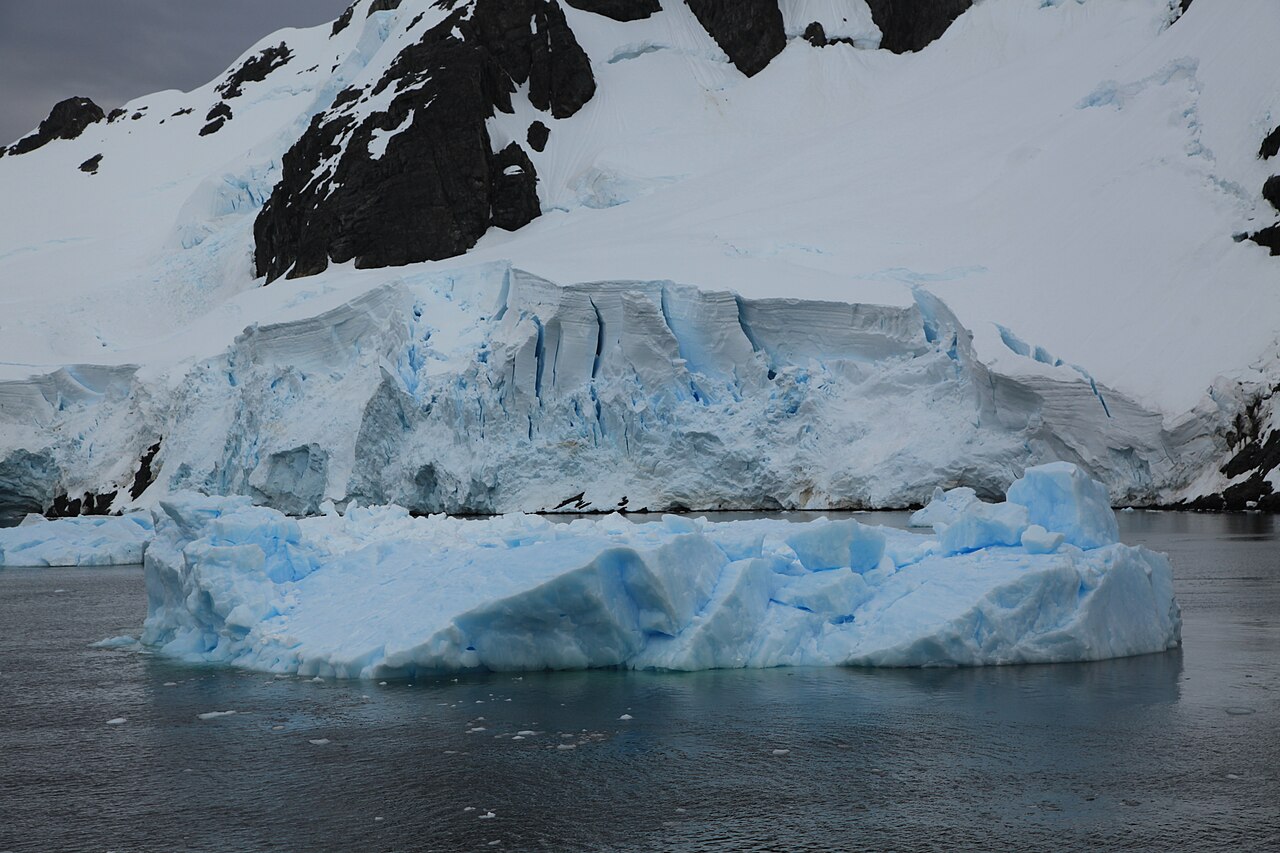
Essential Camera Gear for Antarctica
Antarctica's conditions dictate the gear list more than personal preference does: salt spray on Zodiac transits, sustained cold, and condensation every time equipment moves between a warm ship interior and the outside deck. Two principles hold regardless of budget or skill level: weather sealing is not optional, and every critical item needs a backup.
Camera Bodies and Lenses
A two-body setup avoids changing lenses in blowing spray or sub-zero wind, both of which invite dust and moisture onto the sensor. For wildlife, a telephoto zoom in the 100-400mm or 200-600mm range covers most penguin, seal, and whale work, with fast autofocus and a high burst rate mattering more than raw reach for birds in flight or a breaching whale. A wide-angle in the 16-35mm range handles icebergs and landscape scenes where the subject is the scale of the environment itself. Mirrorless bodies have largely replaced DSLRs for this kind of trip: better weather sealing, more reliable autofocus tracking on moving subjects, and a silent electronic shutter that does not startle wildlife at close range.
Filters, Memory Cards, and Spare Batteries
Cold cuts battery life faster than most first-time visitors expect, and running out mid-landing is the single most common gear mistake on these trips - plan for three to four spares per body as a baseline. High-capacity, high-speed memory cards reduce the risk of dropped frames during long burst sequences. A circular polarizer is the most useful filter for cutting reflections off water and wet ice, and a UV filter doubles as physical protection for the front element against spray. Neutral density filters see limited use given how bright and contrasty high-summer light already is.
Cold Weather Camera Protection
Two environmental threats do most of the damage: moisture from spray, rain, or Zodiac transits, and condensation from moving between a cold exterior and a warm, humid ship interior. A waterproof cover or dry bag handles active use outdoors; silica gel packets in the camera bag manage humidity in storage. On return to the ship, sealing gear in a bag and letting it warm gradually prevents condensation from forming on internal components. Neoprene lens covers and hand warmers tucked near batteries help maintain both mechanical performance and charge in extreme cold.
Smartphone and GoPro Photography in Antarctica
Current smartphone cameras handle candid moments and environmental context reasonably well in soft light, but they struggle with fast wildlife action and cannot match a telephoto's reach. Action cameras fill a different gap: Zodiac landings, kayaking, and first-person perspectives that a primary camera, often stowed for protection during a wet transit, cannot easily capture. Neither replaces a dedicated body for serious wildlife work, but both earn their place as a backup when the main camera is packed away or a shot calls for a different field of view entirely. A longer version of this list, including how gear priorities shift for fly-sail baggage limits, is available in the full camera gear guide.
Essential Camera Gear Checklist
- Two camera bodies
- Telephoto zoom (100-400mm+)
- Wide-angle lens (16-35mm)
- 3-4 spare batteries per body
- High-speed memory cards
- Circular polarizer
- UV filter
- Waterproof dry bags
- Silica gel packets
- Laptop or tablet for backups
- Binoculars
- Zodiac-safe camera backpack
In-Field Photography Tips for Antarctica
Everything covered so far - timing, ship choice, gear - comes together in five shooting environments on any polar photography expedition: the ship deck, the Zodiac, penguin colonies, iceberg and landscape scenes, and the wider wildlife beyond penguins. Ethical practice governs all of them. IAATO's minimum approach distances are not a constraint bolted onto the experience; they are the professional standard every guide on these expeditions enforces during landings.
Shooting from the Ship Deck and Bridge
The ship itself is the most underused vantage point for first-time expedition photographers. The Drake Passage and the Southern Ocean crossing produce strong seabird-in-flight opportunities, with albatrosses, petrels, and skuas often tracking the ship for hours. Bridge access, where the operator offers it, gives an elevated, stable, sheltered platform for spotting and long-lens work; confirm whether it is available before booking, since it varies. From either position, brace against a rail for stability and use a shutter speed of at least 1/2000s for fast-moving seabirds.
Zodiac Photography Techniques
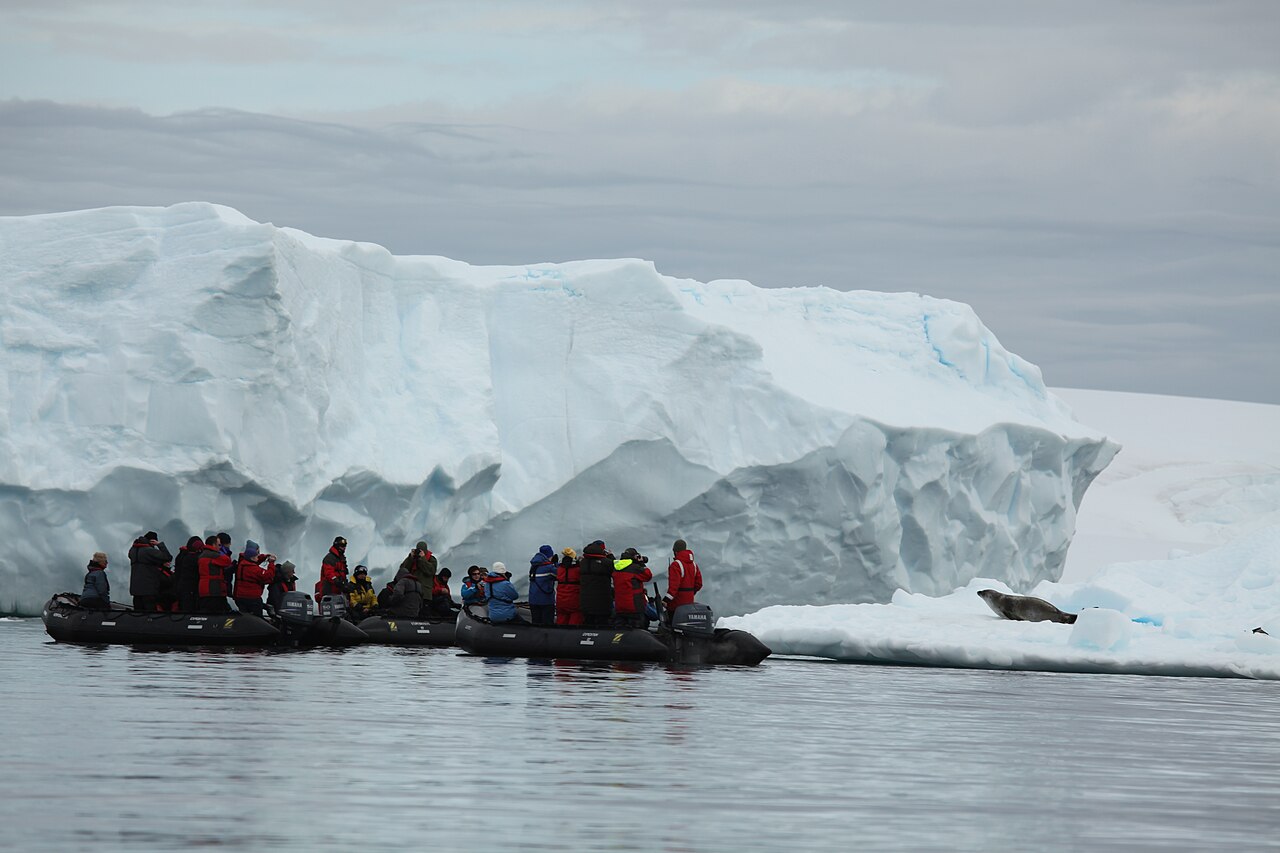
A Zodiac is an unstable platform with an unpredictable subject on the other end, which means working fast matters more than working carefully. Use a minimum shutter speed of 1/1000s for general wildlife, faster still for a breaching whale, and lean on burst mode for any sequence rather than trying to time a single frame. Panning - moving the camera with a bird in flight at a slower shutter speed - produces a sharp subject against a motion-blurred background. Brace against the Zodiac's tube rather than attempting to use a monopod, which is impractical in this configuration. Basic etiquette matters too: call out a subject rather than leaning into someone else's shot, and let the driver know before repositioning.
Photographing Penguin Colonies
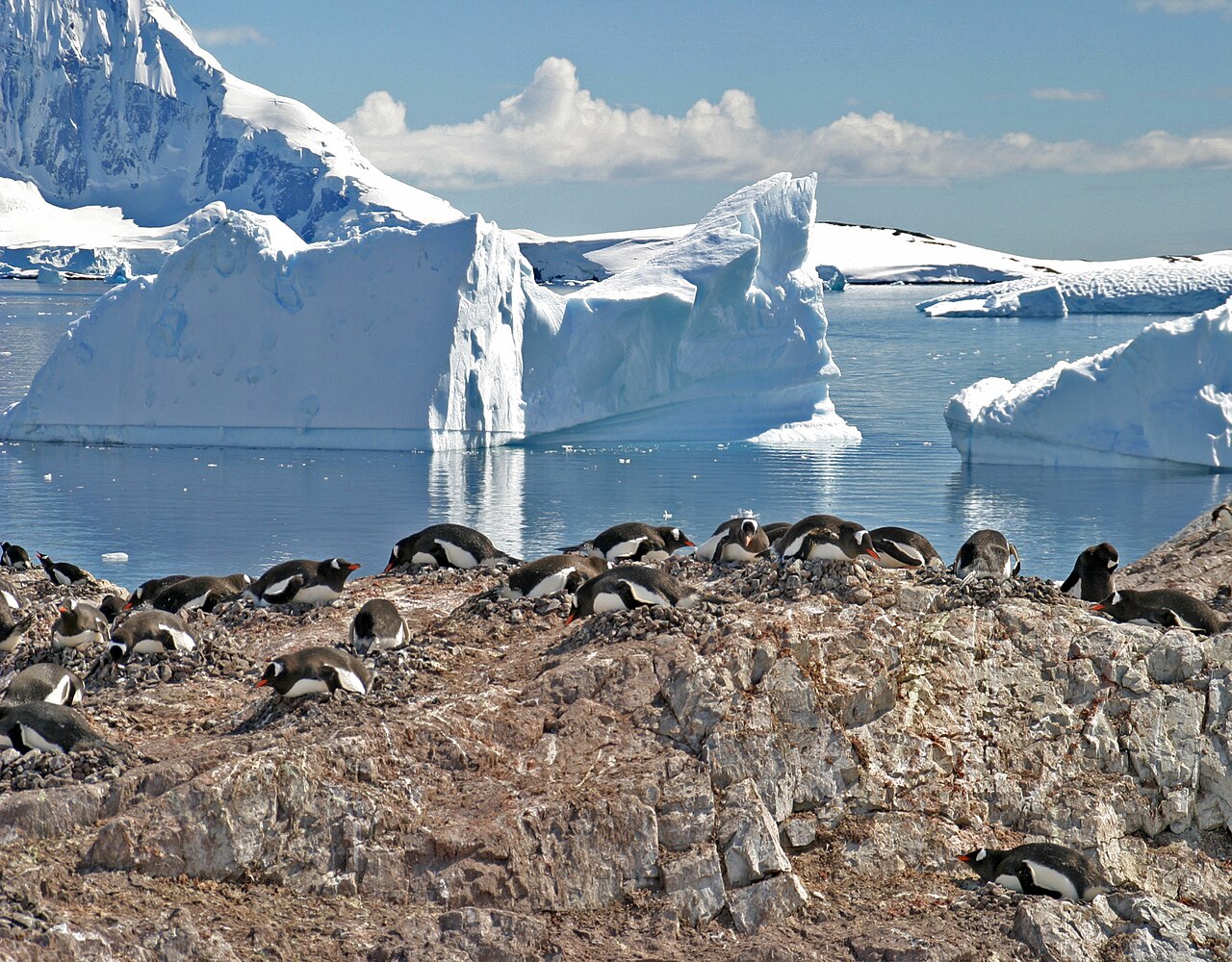
Arriving early in a landing window matters, since colonies fill with photographers quickly and the best low-angle positions go first. Shooting from a low angle, lying prone where the ground and rules allow, produces the eye-level perspective that separates a colony snapshot from a genuine portrait. Reading behavior helps more than reacting to it: watch for a nest-relief changeover, a chick begging to be fed, or a group returning from the sea by porpoising through the surf, and be positioned before it happens. Gentoo penguins tend to be the most approachable and behaviorally active; Adelies are more skittish. IAATO sets minimum approach distances for all of it, though penguins frequently close that distance themselves, approaching photographers out of simple curiosity.
Iceberg and Landscape Photography
Conveying scale is the central challenge in iceberg photography, since a wall of ice photographs as an abstract shape without something recognizable in frame - a Zodiac, the ship, or a person restores the sense of size. Horizon placement and reflections in calm water are the two most reliable compositional tools available in this landscape. Bright ice and white surroundings routinely fool a camera's meter, so overexposing by one to two stops from the metered reading is standard practice. Overcast light is often the photographer's friend here: it softens harsh contrast and reveals the subtle blue and turquoise gradations inside a glacier face that direct sun washes out.
Scale
Include a Zodiac, the ship, or a person in frame to anchor the size of ice and landscape scenes.
Horizon & Reflection
Place the horizon deliberately; calm water reflections double as a compositional anchor.
Exposure for Ice
Overexpose by +1 to +2 stops from the metered reading to keep snow and ice true white.
Light Quality
Overcast skies reveal color in glacier faces; direct midday sun tends to wash it out.
Wildlife Photography: Whales, Seals, and Seabirds
Wildlife photography in Antarctica rewards patience more than any single piece of gear, and humpback whales test that the most: keep a telephoto ready and learn to read a surfacing pattern, since an experienced naturalist guide who has watched the same behavior for years improves the odds of a usable frame considerably. Leopard seals hauled out on an ice floe sometimes approach a Zodiac on their own, drawn by curiosity rather than aggression; the right response is to stay calm, move slowly, and shoot from the boat rather than disembarking. Seabirds - wandering albatross, snow petrels, Antarctic terns - are best worked from the ship deck using the panning technique described above, at a correspondingly high shutter speed. Deeper field technique for each of these shooting environments, plus the IAATO ethics framework behind them, is covered in the wildlife photography tips guide.
Antarctica Photography Packing Checklist
This list covers photography-specific kit only - general expedition clothing and equipment is covered separately by every operator's pre-departure materials.
| Item | Why It's on the List |
|---|---|
| ✓ Two camera bodies | Avoids lens changes in spray and cold |
| ✓ Telephoto + wide-angle lens | Covers wildlife and landscape subjects |
| ✓ 3-4 spare batteries per body | Cold cuts battery life significantly |
| ✓ High-capacity memory cards | Avoids dropped frames during bursts |
| ✓ Circular polarizer + UV filter | Reflection control and front-element protection |
| ✓ Waterproof dry bags | Protects gear during Zodiac transits |
| ✓ Silica gel packets | Manages condensation in storage |
| ✓ Laptop or tablet | Backs up cards each evening |
| ✓ Binoculars | Scouts subjects before raising a camera |
| ✓ Zodiac-safe camera backpack | Keeps gear dry and organized ashore |
| ✓ Touchscreen-compatible gloves | Avoids constant re-gloving between shots |
| ✓ Spare camera strap | Simple backup for a common failure point |
Drone Rules in Antarctica
Drone use in Antarctica is heavily restricted, and effectively prohibited on the great majority of commercial expedition cruises without explicit prior authorization from the operator and, in some cases, national authorities. The restriction exists primarily because drone noise and low-altitude proximity can stress nesting penguins and other seabirds, risking colony disturbance during a season when a flushed nest means an exposed egg or chick. IAATO guidelines govern this for the great majority of commercial operators. A small number of professionally led photography expeditions may hold specific permits for controlled use; that is the exception, not something to plan a trip around. Practical alternatives for photographers who wanted an aerial perspective are covered in the full drone rules guide.
Antarctica Photography Tour Comparison
Bringing the earlier criteria together, four broad categories cover nearly every antarctica photography tours option on the market: small-ship expeditions, dedicated photography departures, standard ships carrying a photography guide, and fly-sail formats. None is universally best - the right choice depends on whether image quality and access, structured instruction, casual guidance, or time efficiency matters most for a given trip. The table below lines up the same four categories against duration, ship size, and photography focus so they can be compared on their actual attributes rather than marketing language alone.
| Tour Type | Duration | Ship Size | Photo Focus | South Georgia | Price |
|---|---|---|---|---|---|
| Small Ship Expedition | 10-11 days (verify) | Small-to-mid | ★★★☆☆ | Optional extension | $$-$$$ |
| Dedicated Photography Cruise | 11-14 days (verify) | Small | ★★★★★ | Often included or offered | $$$$ |
| Ships with Photography Guide | 10-11 days (verify) | Mid-to-large | ★★★☆☆ | Rarely included | $$-$$$ |
| Fly-Sail Format | 7-9 days (verify) | Small-to-mid | ★★★☆☆ | Not typically offered | $$$ |
Antarctica Photo Workshops on Board
A structured onboard photography programme typically includes a pre-landing briefing on the day's specific opportunities, a post-landing image review where a guide walks through frames with the group or one-on-one, dedicated post-processing sessions, and direct instruction in composition and camera settings suited to the conditions outside. That combination, not simply having a photographer aboard, is what separates a genuinely instructional trip from a well-guided one. Photographers who want to return with both better images and better technique should confirm which of these specific elements a given itinerary actually includes.
Final Advice for Booking Your Antarctica Photography Tour
Lock in timing first: shoulder season for light and landscape work, high summer for wildlife volume, and a South Georgia extension if diversity and density matter more than budget. Choose ship type by photography priority rather than price alone, since guide ratio and Zodiac group size affect the images far more than cabin category does. Build the gear list around redundancy and protection rather than the newest body on the market, and book the best guide access the budget allows. Antarctica photography tours reward photographers who prepare for the conditions specifically, not travelers who simply bring a good camera along.
Go Deeper on Each Topic
The sections above cover the essentials. Each of the six guides below goes further into a single topic, with more field detail than fits in one pillar page.
Frequently Asked Questions
Is a drone allowed for photography in Antarctica?
No, not in practice. IAATO guidelines and standard operator policy prohibit recreational drone use on nearly all commercial expedition cruises. A small number of professionally led departures hold specific permits for controlled use, but that is the exception rather than something to plan a standard trip around.
What clothing should I wear for an Antarctic photography trip?
A layering system - base, mid, and a waterproof, windproof outer shell - handles the range of conditions from a calm landing to a windy Zodiac transit. Gloves matter specifically for photographers: choose a pair compatible with touchscreen and camera controls so cold hands do not force constant re-gloving between shots.
How can I protect my camera gear from the cold and moisture in Antarctica?
Condensation and battery drain cause more field problems than any other factor. Use a dry bag or waterproof cover during active shooting, pack silica gel with stored gear, let equipment warm gradually after returning indoors, and carry three to four spare batteries per body rather than relying on one.